 Raw Material Handling
 Dosing & Batching
 Pneumatic Conveying
 Filling & Packaging
 Control & Automation
 Equipment & Products
 Plastic
 Cable
Cable
 Chemistry
 Mineral
 Food
Food
 Environment & Energy
 Project Management
 Systems Engineering
 Manufacturing & Factory Testing
 Control & Automation
 Installation & Commissioning
 Service & Spare Parts
 About Us
 Management Team
 Our Values
 Career
 Digital Library
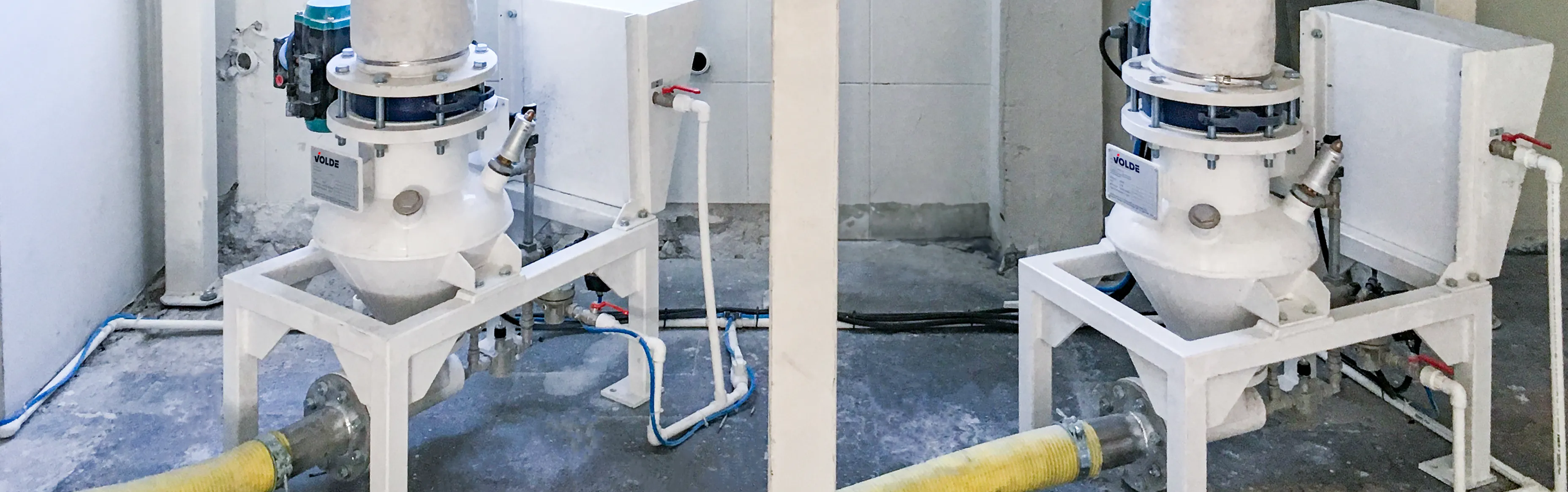

Carbon Black Handling & Feeding
Carbon Black Handling & Feeding
Low-Velocity Conveying. ATEX-Oriented Design. Reliable Mixer Feeding
Carbon black is one of the most demanding bulk materials in rubber and tire production. Its low bulk density, difficult flow behavior, dust generation tendency and potential hazardous-area requirements influence every stage of the process — from storage and silo discharge to pneumatic conveying, weighing and Banbury mixer feeding. VOLDE develops complete carbon black handling systems combining bulk storage, big bag unloading, dense-phase or vacuum conveying, mixer-side weighing and enclosed dust-controlled transfer. Each system is engineered according to carbon black grade, required capacity, conveying distance, plant layout and mixing-room architecture, with ATEX / Ex measures incorporated where required by the project-specific zone classification and dust-risk assessment
| Carbon Black Storage & Discharge
Carbon black can compact, bridge and flow irregularly during storage, particularly when silo geometry and discharge equipment are not matched to the actual material grade and bulk density.
VOLDE designs silo bottoms, outlet geometries and flow-assistance systems according to the behavior of the carbon black being handled. Where gravity discharge alone is insufficient, SILOCONE bin activators, aeration or other suitable flow-assistance technologies can be incorporated to maintain stable feeding toward the conveying system.
Depending on plant logistics and consumption rate, carbon black can be received through central silos, big bag unloading stations or intermediate storage systems.
• Central carbon black silos
• Big bag unloading systems
• Application-specific silo discharge
• Flow assistance for poor-flowing grades
• Level and inventory monitoring
• Enclosed transfer toward the conveying system
Where required by the hazardous-area assessment, silo discharge, filtration, electrical equipment and instrumentation can be configured for Zone 21 / Zone 22 applications with suitable Ex equipment, grounding and explosion-protection measures.


| Dense-Phase & Vacuum Conveying for Carbon Black
Carbon black conveying requires careful control of air velocity and material movement. Excessive conveying velocity can increase pellet degradation and fines generation, while unsuitable conveying conditions can create unstable flow and unnecessary filter loading.
For higher capacities and longer distances, VOLDE DENSPLUS dense-phase conveying systems transfer carbon black at lower gas velocities and higher solids loading than conventional dilute-phase systems. Conveying pressure, pipeline diameter and operating parameters are selected according to material grade, throughput, distance and pipeline geometry.
AIRPLUS air-assist modules can be integrated along the conveying route where required to support stable product movement through long pipelines, bends and difficult sections without unnecessarily increasing conveying velocity throughout the complete line.
Where the process layout favors negative-pressure transfer, VACUMATE vacuum conveying systems can be used to collect carbon black from big bag stations, local bins or multiple pickup points and transfer it toward centralized receivers, weighing systems or mixer-side day bins.
• DENSPLUS dense-phase pressure conveying
• VACUMATE industrial vacuum conveying
• Low-velocity transfer for pelletized carbon black
• Multiple pickup and destination points
• Long-distance conveying
• AIRPLUS air-assist where required
• Enclosed material transfer
• ATEX / Ex configurations according to project requirements
Vacuum conveying also offers an additional containment advantage in suitable applications because the conveying line operates under negative pressure, helping limit outward dust leakage at potential sealing points.

| Carbon Black Weighing & Banbury Feeding
The final objective of the handling system is to deliver carbon black to the Banbury process in the quantity required by the active compound recipe and at the correct point in the mixing cycle.
VOLDE integrates mixer-side receiving bins and load-cell weighing hoppers with the Banbury feeding sequence. Carbon black transferred from central storage or local pickup points is collected above the mixing room, weighed according to the batch recipe and released to the mixer only when the required process conditions are confirmed.
Receiving-bin level control, weighing status and pneumatic conveying demand can operate together so that the next batch is prepared while the previous mixing cycle is still in progress.
• Mixer-side carbon black day bins
• Load-cell weighing hoppers
• Recipe-controlled batch weighing
• Automatic refill from central storage
• Banbury-ready and discharge interlocks
• Multi-mixer material distribution
• Batch and consumption records
Dust extraction, filtered venting and suitable Ex equipment can be incorporated around weighing and mixer charging points according to the actual dust-risk assessment and plant classification.
VOLDE combines carbon black storage, dense-phase and vacuum conveying, precision weighing and Banbury feeding within one integrated handling system developed specifically for rubber and tire mixing rooms.


| Contact
Let us understand your process and work together to implement the most accurate and reliable solution for your needs.