 Raw Material Handling
 Dosing & Batching
 Pneumatic Conveying
 Filling & Packaging
 Control & Automation
 Equipment & Products
 Plastic
 Cable
Cable
 Chemistry
 Mineral
 Food
Food
 Environment & Energy
 Project Management
 Systems Engineering
 Manufacturing & Factory Testing
 Control & Automation
 Installation & Commissioning
 Service & Spare Parts
 About Us
 Management Team
 Our Values
 Career
 Digital Library

Process Automation Systems
Process Automation Systems
Process Know-How. Built into the Control System
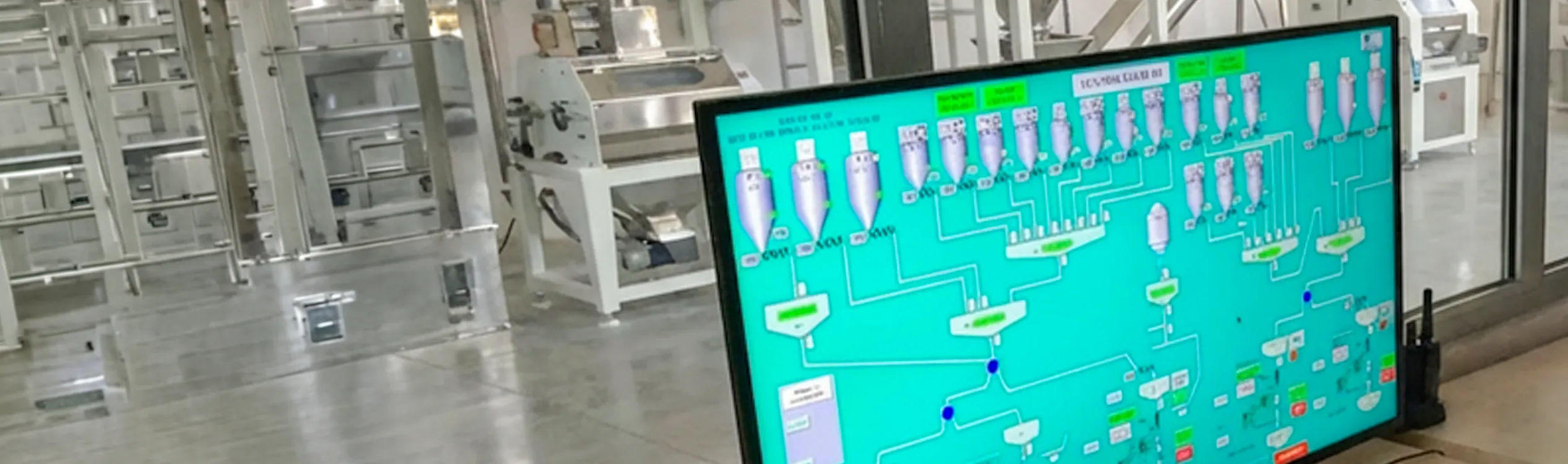
VOLDE Process Automation Systems bring conveying, dosing, weighing, mixing and material feeding operations under a single control architecture. Because reliable automation starts with understanding how the process itself behaves, control logic is developed together with the mechanical and pneumatic system — not added after the equipment is installed. PLC control, SCADA/HMI, recipe management, field instrumentation, electrical panels and production data are integrated to create a coordinated automation platform for the complete bulk material process.
| Process Logic Built Around the Plant
A powder handling system is governed by more than simple start/stop commands. Conveying pressure, material availability, valve positions, weighing status, mixer demand and equipment readiness must be evaluated continuously before each process step is allowed to proceed.
VOLDE develops PLC sequences around these process relationships. Dense-phase and vacuum conveying cycles are coordinated with filling levels and downstream demand; dosing systems operate according to recipe targets and weighing tolerances; mixers and extruders receive material only when the required process conditions have been confirmed.
Interlocks, permissives and equipment-protection logic are incorporated into the control strategy to prevent incorrect operating sequences and provide controlled responses to abnormal process conditions.
Process Control Capabilities
• Dense-phase and vacuum conveying cycle control
• Pressure, filling and discharge sequence management
• Gravimetric and volumetric dosing control
• Automatic batch and recipe execution
• Mixer, extruder and process equipment feeding
• Equipment interlocks and operating permissives
• Automatic line selection and valve sequencing
• Level, pressure, weight and equipment-status monitoring
• Manual, semi-automatic and automatic operating modes
• PROFINET, Modbus TCP/IP and industrial network integration
| Production Visibility. Recipe Control. Traceability
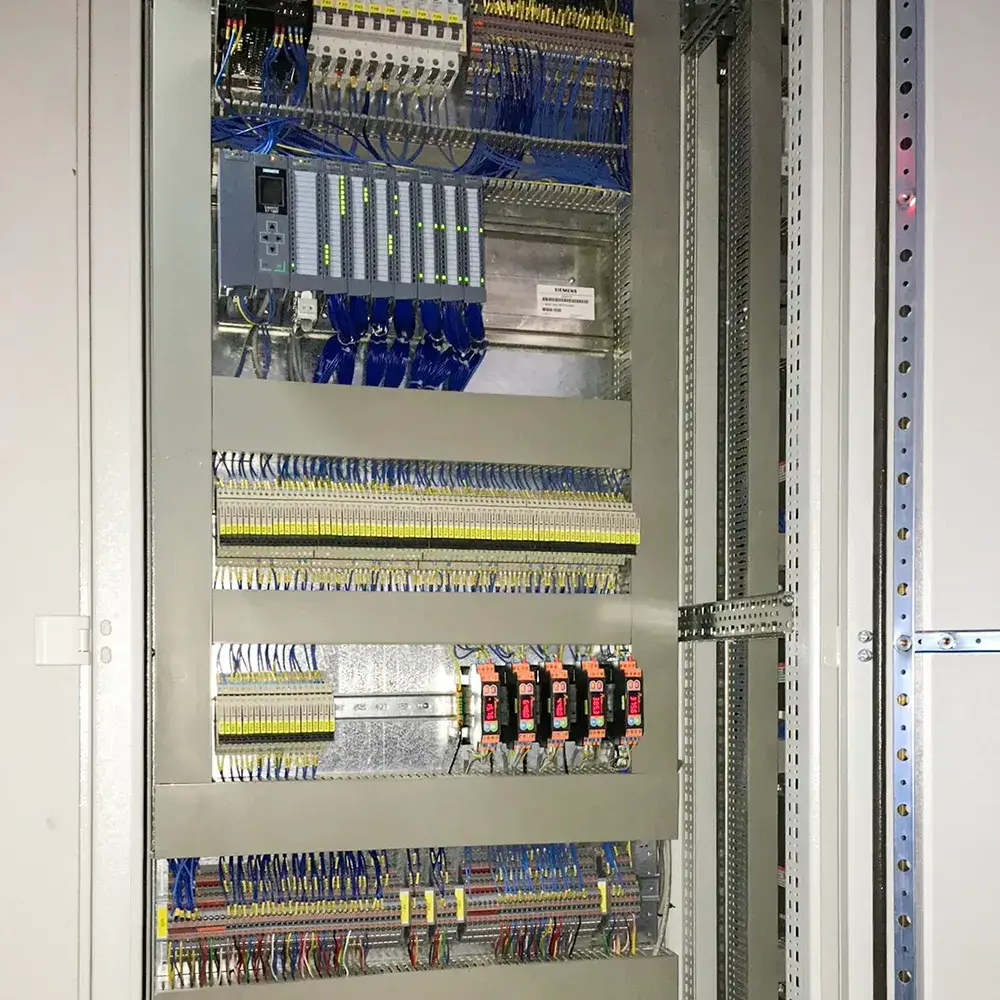
SCADA and HMI systems provide the operating layer between the production process and the people responsible for it. Instead of presenting individual machines as isolated screens, VOLDE visualizes the complete material flow so operators can understand what the plant is doing, where each batch is in the process and why an operation has stopped.
Recipe management coordinates ingredient selection, target quantities and production sequences. Actual weighing values, material consumption, alarms, operator actions and batch information can be recorded automatically, creating a structured production history for process analysis and traceability.
User access levels can be assigned according to operational responsibility, while alarm management and historical trends provide the information required to investigate deviations and optimize plant operation. Where required, production and consumption data can be exchanged with MES, ERP or other plant-level systems.
SCADA & Production Data
• Graphical plant and process visualization
• Central recipe management
• Batch execution and production tracking
• Actual versus target weighing records
• Raw material consumption monitoring
• Historical trends and process data
• Alarm history and event recording
• Operator and user-level management
• Batch and production reporting
• MES / ERP data integration
• Remote diagnostics and service access
| Electrical Engineering for Reliable Field Operation
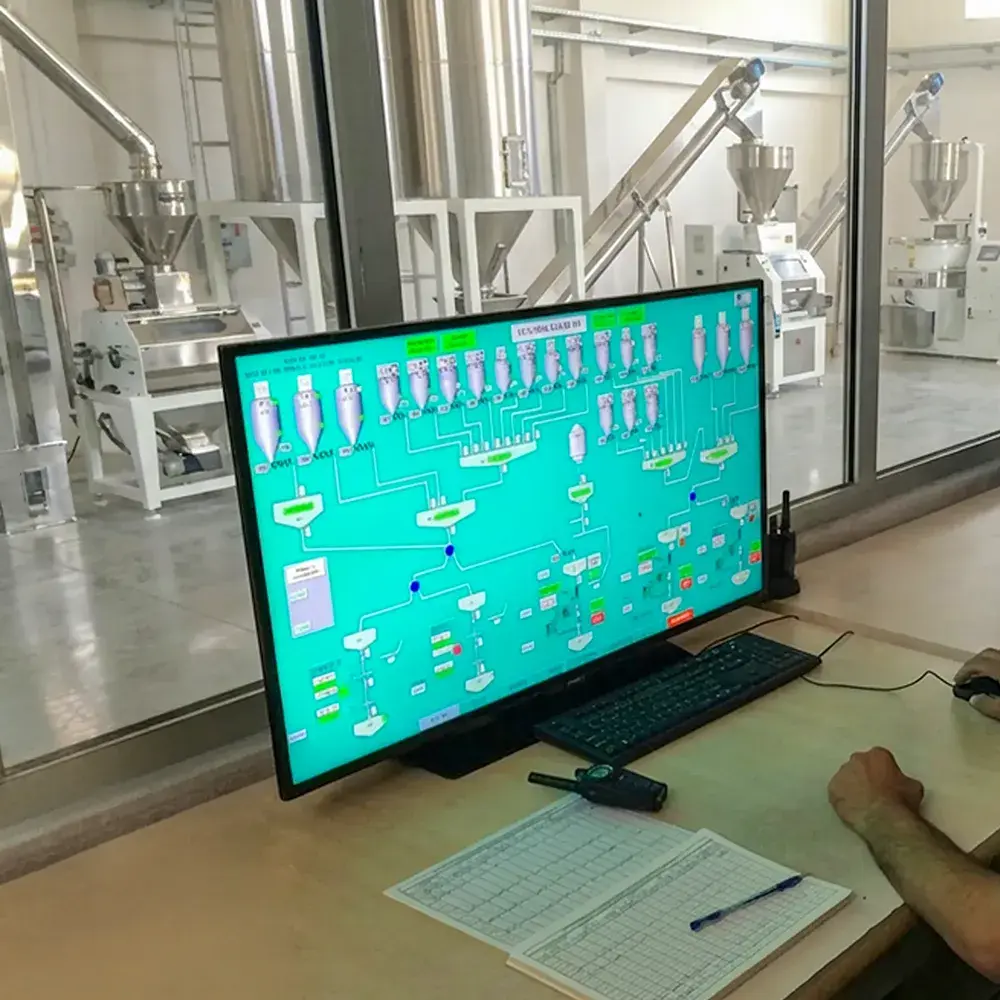
The performance of an automation system ultimately depends on the quality of its electrical infrastructure. Control panels, motor power distribution, instrumentation, field cabling and industrial communication networks are therefore developed as part of the same process engineering scope.
VOLDE designs and manufactures PLC, MCC and remote I/O panels according to the equipment architecture and plant layout. Power, control and instrumentation circuits are arranged with appropriate separation, while cable sizing, field routing, grounding and signal transmission are considered during engineering rather than being resolved only during installation.
Field instruments including load cells, pressure transmitters, level sensors and valve feedback devices are incorporated into a documented I/O architecture that simplifies commissioning, diagnostics and future maintenance.
Electrical & Field Infrastructure
• PLC, MCC and remote I/O panel engineering
• Panel manufacturing and functional testing
• Motor power and control architecture
• Instrumentation and signal cabling
• Cable sizing and route engineering
• Cable tray and support-system design
• Industrial Ethernet and field communication networks
• Load cell and analogue signal integration
• Equipment and cable identification
• Grounding and equipotential bonding
• ATEX / Ex equipment integration where required
• Electrical drawings, I/O lists and field documentation

| Commissioning, Tuning & Process Optimization
Commissioning is where the control philosophy, mechanical equipment and actual material behaviour come together. VOLDE commissioning therefore goes beyond verifying that motors, valves and sensors operate correctly.
After I/O and functional checks, automatic sequences are tested under real process conditions and operating parameters are adjusted using the actual product. Conveying pressures and air settings can be tuned to material behaviour, dosing parameters refined according to feeder response, and batch sequences optimized around the real production cycle.
FAT and SAT procedures provide a structured basis for verification, while operator training ensures that operating modes, alarms, recipe functions and recovery scenarios are understood before the system enters routine production.
Commissioning & Lifecycle Support
• FAT and SAT execution
• I/O and functional verification
• Automatic sequence testing
• Dense-phase conveying line tuning
• Vacuum conveying parameter optimization
• Dosing and weighing parameter adjustment
• Recipe and batch validation
• Alarm and interlock verification
• Operator and maintenance training
• Remote diagnostics and technical support
The result is an automation system developed around the actual process — connecting equipment, material flow, production data and operators within one coordinated control environment


| Contact
Let us understand your process and work together to implement the most accurate and reliable solution for your needs.